
Elsa, known as “la Viennoise”: an iconic lithograph by Henri de Toulouse-Lautrec presented at auction
His paintings depict life at the Moulin Rouge, as well as in other Parisian cabarets and theatres, and in the brothels he frequented. At the end of the 19th century, Japanese prints left a lasting imprint on a new artistic discipline: colour lithography.
The encounter between Pierre Bonnard and Toulouse-Lautrec marked a turning point in the latter’s career. Influenced by Bonnard, Toulouse-Lautrec revolutionised lithography by adopting stylistic principles derived from Japanese art: bold outlines, incomplete forms and the use of a wide range of matte colours.
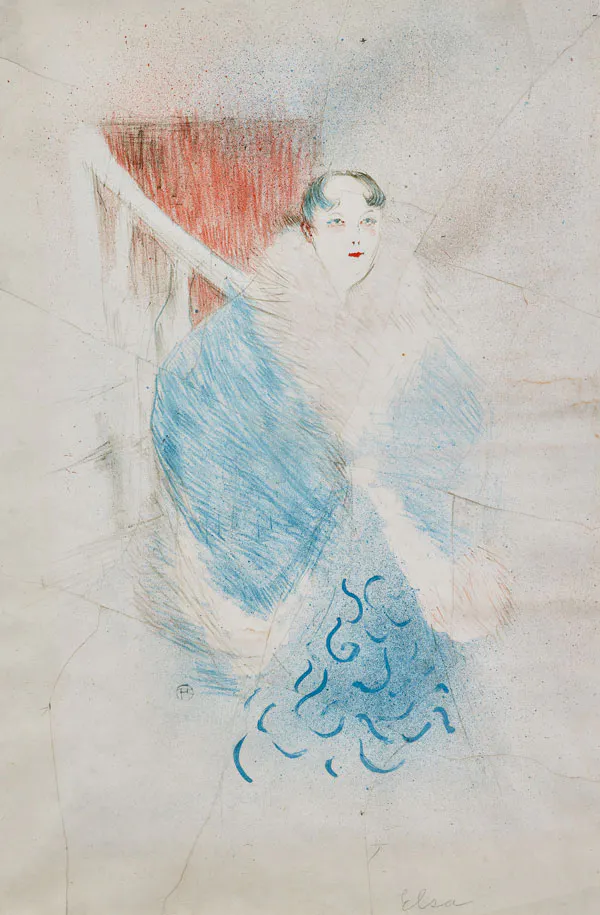
Henri de Toulouse-Lautrec (1864-1901)
Elsa, known as “la Viennoise”, 1897
Colour lithographs: 5 proofs, the signed final version
Estimate: €100,000 - 150,000
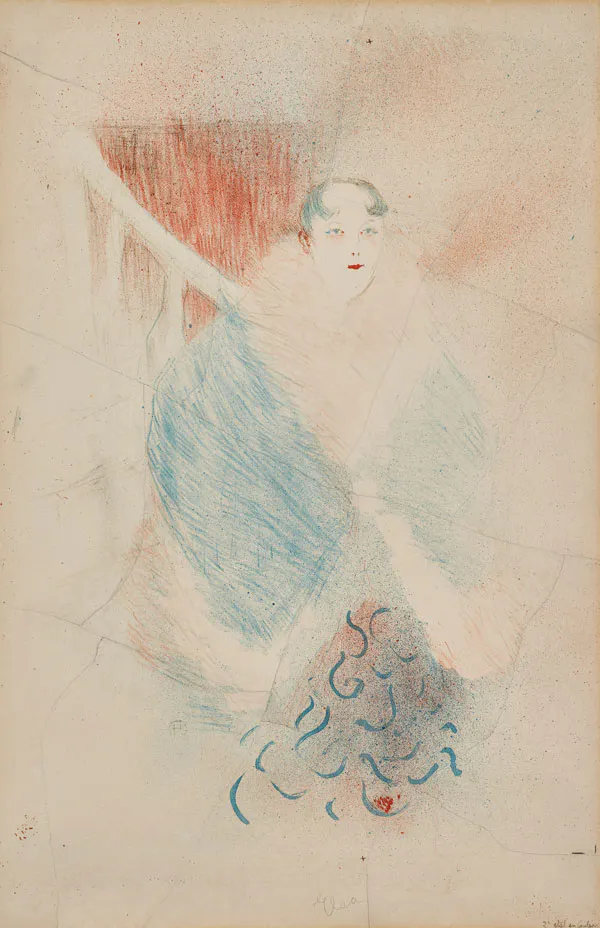
Henri de Toulouse-Lautrec (1864-1901)
Elsa, known as “la Viennoise”, 1897
Colour lithographs: 5 proofs, the signed final version
Estimate: €100,000 - 150,000
Elsa, known as “la Viennoise”, presented at Artcurial, was an Austrian prostitute who lived in Paris at the end of the 19th century. She served as a model for Toulouse-Lautrec, who portrayed her in several works, including a graphite drawing now held at the Musée Toulouse-Lautrec, as well as in one of the twelve impressions of the lithograph that we will be offering for sale.
The five trial proofs included in the upcoming Limited Edition auction on May 20th were, as was often the artist’s practice, destroyed while he awaited the final impression he would designate as definitive. They were later reassembled and laid down on wove paper. Acquired in 1978 in London by a European collector at the Charell auction, they have remained in the same collection ever since.
While many painters of modern life depicted brothels as places of pleasure and vice, portraying prostitutes as vulgar and mercenary figures, Toulouse-Lautrec stands apart by offering images free from moral judgment and voyeurism.
The artist portrays this young woman descending a staircase as a woman of society, perhaps returning from the theatre or the opera. What distinguishes her from a bourgeois woman is the absence of a hat—she is bareheaded. At the time, to be “en cheveux” meant to appear without a hat or head covering, which was considered improper.
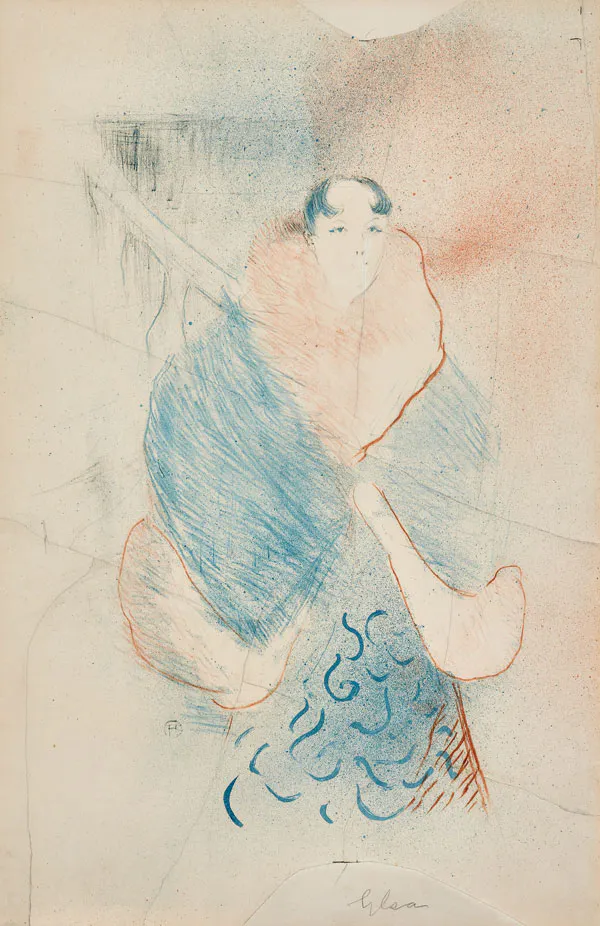
Henri de Toulouse-Lautrec (1864-1901)
Elsa, known as “la Viennoise”, 1897
Colour lithographs: 5 proofs, the signed final version
Estimate: €100,000 - 150,000
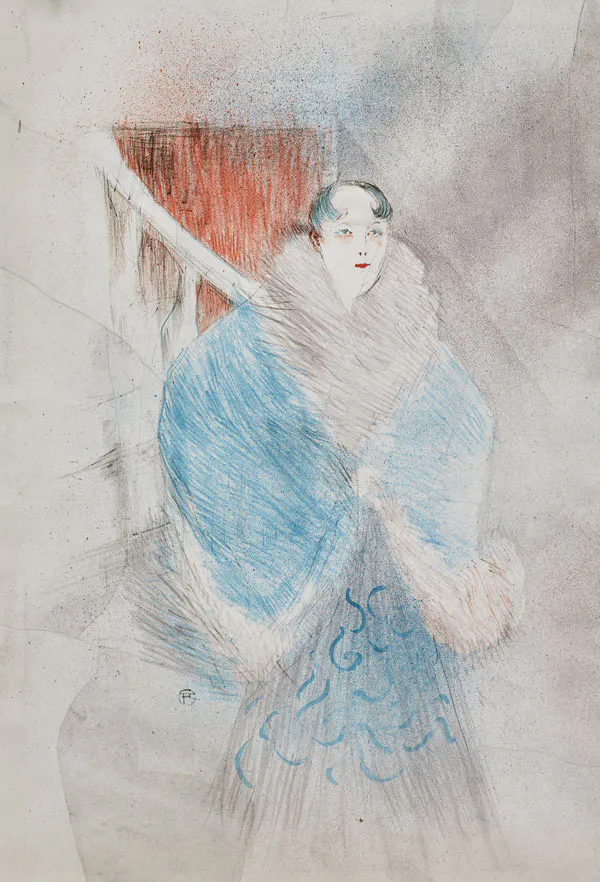
Henri de Toulouse-Lautrec (1864-1901)
Elsa, known as “la Viennoise”, 1897
Colour lithographs: 5 proofs, the signed final version
Estimate: €100,000 - 150,000
He emphasises her elegance in an image whose decorative style is close to that of the Nabis and the Symbolists, while also reflecting the influence of Japonisme, notably in the treatment of her coat.
These prints demonstrate the artist’s technical virtuosity in depicting the young woman: first through pencil work to define the motifs and outline the forms (the fur collar, the patterns of the skirt, the features of the face), followed by the application of colour using the crachis technique, applied with a small pipette.
Henri de Toulouse-Lautrec’s artwork, Elsa, known as “la Viennoise”, will be offered at auction by Artcurial on May 20th, 2026, at 5pm, as part of the Limited Edition auction.
Alongside it, the auction will feature a selection of artworks by major artists such as Pierre Soulages, Pablo Picasso, David Hockney, and Francis Bacon, offering a remarkable overview of editions and multiples from modern and contemporary art.
Our team is at your disposal for any requests for information regarding this lot, including condition reports, additional images, or any other details.
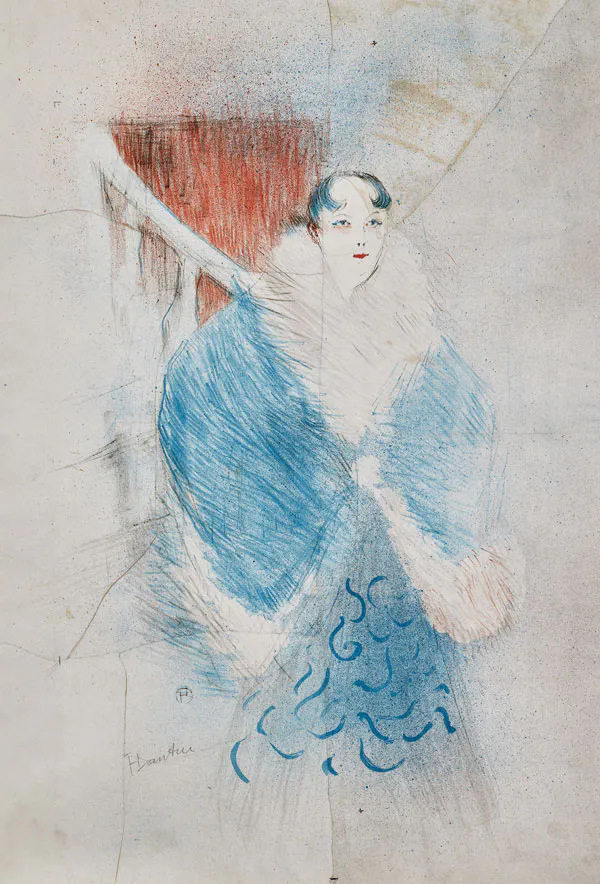
Henri de Toulouse-Lautrec (1864-1901)
Elsa, known as “la Viennoise”, 1897
Colour lithographs: 5 proofs, the signed final version
Estimate: €100,000 - 150,000
Information
Auction
Limited Edition
Wednesday, May 20th, 2026, 5pm
Exhibition
From Thursday, May 14th to Tuesday, May 19th, 2026, 11am – 6pm
Closed Sunday, May 17th, 2026
Contact
Karine Castagna
Tél. +33 1 42 99 20 28